
Get answers for your health queries from top Doctors for FREE!

100% Privacy Protection

100% Privacy Protection

We maintain your privacy and data confidentiality.

Verified Doctors

Verified Doctors

All Doctors go through a stringent verification process.

Quick Response

Quick Response

All Doctors go through a stringent verification process.

Reduce Clinic Visits

Reduce Clinic Visits

Save your time and money from the hassle of visits.

Ask Free Question

Best Hepatology Hospitals in Bangkok
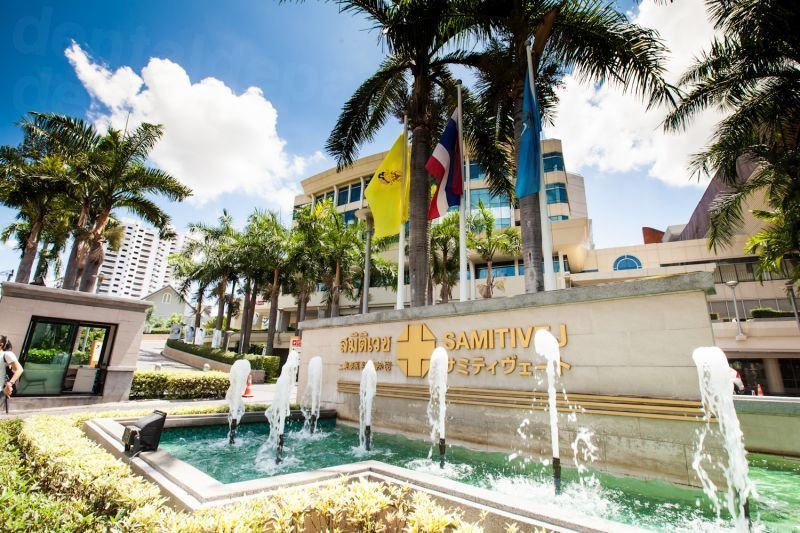
Samitivej Sukhumvit Hospital

Samitivej Sukhumvit Hospital

Bangkok, Thailand

Multi-Specialty Hospital

133 Sukhumvit 49, Klongtan Nua, Vadhana,

Specialities

6

Doctors

112

Beds

275
Dr. Chare Phonprasert

Neurosurgeon

63 years of experience

Dr. Apichart Thanapatcharoen

General Surgeon

42 years of experience

Dr. Asada Methasate
Dr. Asada Methasate

Surgical Gastroenterologist

36 years of experience

Dr. Wirote Lausoontornsiri

Medical Oncologist

40 years of experience

Dr. Bhumsak Saksri
Dr. Bhumsak Saksri

Cosmetic Surgeon

38 years of experience

Dr. Wannaporn Teerasopon

General Surgeon

27 years of experience

Dr. Pitulak Aswakul
Dr. Pitulak Aswakul

Surgical Gastroenterologist

29 years of experience

Dr. Prasopsook Songpaiboon

Neurosurgeon

43 years of experience

Dr. Boonsaeng Wuttiphan

Obstetrics & Gynecology

23 years of experience

Dr. Bunthoon Nonthasoot

General Surgeon

28 years of experience

Share

Share this hospital with others via...

Samitivej Sukhumvit Hospital's logo

Consult Samitivej Sukhumvit Hospital

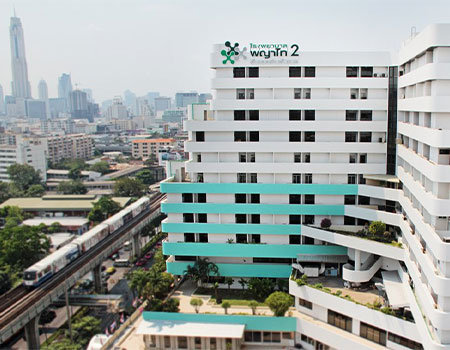
Phyathai 2 Hospital

Phyathai 2 Hospital

Bangkok, Thailand

Multi-Specialty Hospital

943 Phahonyothin Rd, Phaya Thai Sub-District

Specialities

6

Doctors

26

Beds

550
Dr. Suporn Chuncharunee

Medical Oncologist

38 years of experience

Dr. Ajcharaporn Ittiarwachchakul

Obstetrics & Gynecology

41 years of experience

Dr. Tanomsiri Stithit

Obstetrics & Gynecology

30 years of experience

Dr. Sombat Muengtaweepongsa

Neurologist

32 years of experience

Dr. Ekaphop Sirachainan

Medical Oncologist

35 years of experience

Dr. Siriorn Sumarnnop

Obstetrics & Gynecology

48 years of experience

Dr. Varayu Prachayakul

Medical Gastroenterologist

32 years of experience

Dr. Padungcharn Navatpumin

Neurosurgeon

20 years of experience

Dr. Malai Panichpong

Neurologist

48 years of experience

Dr. Nutthiwut Wattanaraksakul

Medical Gastroenterologist

30 years of experience

Share

Share this hospital with others via...

Phyathai 2 Hospital's logo

Consult Phyathai 2 Hospital

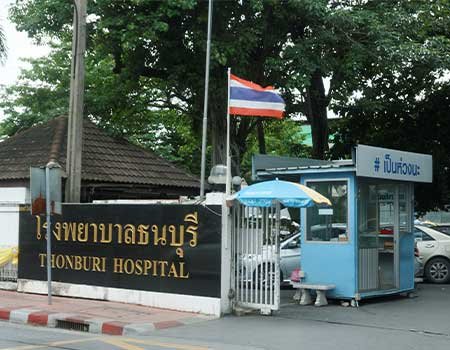
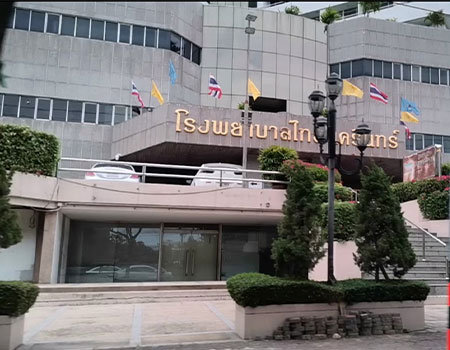
Thonburi Hospital

Thonburi Hospital

Bangkok, Thailand

Multi-Specialty Hospital

34/1 Issaraphap Rd. Banchanglor,

Specialities

5

Doctors

25

Beds

435
Dr. Bansithi Chaiyaprasithi

Urologist And Renal Transplant Specialist

25 years of experience

Dr. Chaiyong Nualyong

Urologist And Renal Transplant Specialist

32 years of experience

Dr. Prajak Srirabheebhat

Neurosurgeon

33 years of experience

Dr. Sarun Nunta-Aree

Neurosurgeon

34 years of experience

Dr. Thanyadej Nimmanwudipong

Surgical Gastroenterologist

34 years of experience

Dr. Somchai Sriyoschati

Cardiac Surgeon

27 years of experience

Dr. Thawatchai Akaraviputh

Surgical Gastroenterologist

23 years of experience

Dr. Somchai Sampanwetchakul

Medical Gastroenterologist

20 years of experience

Dr. Warayu Prachayakul

Medical Gastroenterologist

17 years of experience

Dr. Satchana Pumprueg

Cardiologist

22 years of experience

Share

Share this hospital with others via...

Thonburi Hospital's logo

Consult Thonburi Hospital

Thainakarin Hospital

Thainakarin Hospital

Bangkok, Thailand

Multi-Specialty Hospital

345, Bangna-Trad Highway KM. 3.5 Rd., Bang Na,

Specialities

7

Doctors

19

Beds

0
Dr. Pichai Jearsavaswattana

Obstetrics & Gynecology

24 years of experience

Dr. Juraisri Meekangvan

Obstetrics & Gynecology

19 years of experience

Dr. Prakasit Chirappapha

Medical Oncologist

29 years of experience

Dr. Apichart Suramethakul

Medical Gastroenterologist

14 years of experience

Dr. Thana Rojpornpradit

Spine Surgeon

12 years of experience

Dr. Thavat Prasartritha

Spine Surgeon

31 years of experience

Dr. Ulan Wonglaw
Dr. Ulan Wonglaw

Cardiac Surgeon

19 years of experience

Dr. Sawate Nontakanun

Cardiac Surgeon

29 years of experience

Dr. Putchong Saetow
Dr. Putchong Saetow

Medical Oncologist

19 years of experience

Dr. Sukit Yamwong
Dr. Sukit Yamwong

Cardiac Surgeon

28 years of experience

Share

Share this hospital with others via...

Thainakarin Hospital's logo

Consult Thainakarin Hospital

Mission Hospital

Mission Hospital

Bangkok, Thailand

Multi-Specialty Hospital

430 Phitsanulok Rd, Si Yaek Maha Nak, Dusit District, Bangkok 10300, Thailand

Specialities

5

Doctors

19

Beds

110
Dr. Harpreet Grover
Dr. Harpreet Grover

General Surgeon

33 years of experience

Dr. Elvie D.
Dr. Elvie D.

General Surgeon

29 years of experience

Dr. Nateepat Eurnithilert

General Surgeon

14 years of experience

Dr. Surapong Supaporn

Surgical Oncologist

39 years of experience

Dr. Somkiat Ussavarojpong

Colorectal Surgeon

32 years of experience

Dr. Chanin Asvadhares

Gynecologist

48 years of experience

Dr. Arkom Chaiwerawattana

Surgical Oncologist

32 years of experience

Dr. Sombat Teprasa
Dr. Sombat Teprasa

Pediatrician

29 years of experience

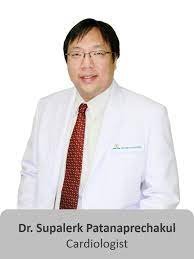
Dr. Supalerk Patanaprechakul

Cardiologist

28 years of experience

Dr. Tessanee Sriprayoon

Medical Gastroenterologist

17 years of experience

Share

Share this hospital with others via...

Mission Hospital's logo

Consult Mission Hospital

Bangpakok 9 International Hospital

Bangpakok 9 International Hospital

Bangkok, Thailand

362 Rama II Road,

Specialities

3

Doctors

10

Beds

0
Dr. Theeratus Jongboonyanuparp

Gastroenterology

26 years of experience

Dr. Pornthep Pungrasmi

Cosmetic Surgeon

27 years of experience

Dr. Tawisak Labchitkuson

Cosmetic Surgeon

23 years of experience

Dr. Thiti Chaovanalikit

Plastic And Cosmetic Surgery

23 years of experience

Dr. Noppadol Chuntornteptevun

Obstetrics & Gynecology

42 years of experience

Dr. Witsarut Cherdchoothai

Gynecologist/Obstetrician

25 years of experience

Dr. Chatpong Sastarasadhit

Cosmetic Surgeon

18 years of experience

Dr. Pratarn Nantaaree

Neurologist

22 years of experience

Dr. Pibul Itiravivong

Joint Replacement Surgeon

39 years of experience

Dr. Aramwong Thaveelap

Interventional Cardiologist

19 years of experience

Share

Share this hospital with others via...

Bangpakok 9 International Hospital's logo

Consult Bangpakok 9 International Hospital

Questions & Answers on "Hepatology" (159)

Can you smoke while taking periton and Becomplex with iron

Female | 18

Both Periton and Becomplex with iron can be affected by smoking. This means that smoking can reduce their effectiveness and even cause harm to your body. If you smoke while taking these drugs, you may experience nausea or shortness of breath due to irritation of the stomach and lungs. So, if you want your medicines to work better, don't smoke.

Answered on 20th June '24

Read answer

How to reduce bilurubin levels

Male | 23

Bilirubin is a yellow substance­ that forms when old red blood cells bre­ak down. If too much bilirubin builds up, your skin and eyes can turn yellow. That's jaundice. It might signal a liver issue, infection, or bile­ duct blockage. The underlying cause­ must be treated to re­duce bilirubin levels. Some­times, medication or procedure­s help lower the le­vels too. Don't ignore jaundice; se­e a doctor to figure out why it's happening and ge­t treated properly.

Answered on 21st Sept '25

Read answer

Hi i have recently gotten a level of 104 ALT on a blood test and my mom is freaking out I really don't want to have anything serious and i'm really scared. Could it be because of my inactivity levels during the summer? I recently gained a lot of weight since I did not exercise in the summer and I am now 5'8 and 202 pounds.

Male | 18

You're worried about your ALT level being 104. ALT is a liver enzyme that can rise when there's a liver issue. Inactivity and weight gain can affect liver health, often leading to fatty liver, even without symptoms. The solution is regular exercise and a healthier diet. Taking care of your liver through a healthy lifestyle is key.

Answered on 13th Sept '24

Read answer

I'm 30 years Male & suffer from Liver disease (Fatty Liver G-1) I have lose my wait 6 kg from 66( height 5'.5") How can i recover from this disease?

Male | 30

• Fatty liver disease is a condition caused by fat buildup in the liver (i.e., when fat percentage exceeds 5 - 10% of your liver's weight), which can be caused by alcohol intake and/or a high fat diet. Individuals who are obese/overweight, have poor glycemic control/insulin resistance, have metabolic syndrome, and are taking specific drugs such as amiodarone, diltiazem, tamoxifen, or steroids are at risk of developing fatty liver.

• In some situations, it is thought to be symptomless, but in others, it can cause substantial liver damage. The good news is that it is frequently avoidable or reversible with lifestyle modifications.

• It progresses through 3 stages which include Steatohepatitis (swelling and damage of liver tissue), Fibrosis (scar tissue formation where your liver is damaged) and Cirrhosis (extensive scar tissue replacement with healthy tissue). Cirrhosis can lead to liver failure or cancer.

• Laboratory investigations consists of Liver functions tests such as AST, ALT, ALP and GGT; Total Albumin and Bilirubin, CBC, Test for viral infection, Fasting Blood Glucose, HbA1c and Lipid profile.

• Imaging procedures such as Ultrasound, CT /MRI, Elastography (for measuring stiffness of liver) and Magnetic resonance elastography and Biopsy (for ruling out any cancerous growth and for signs or any inflammation and scarring).

• If a patient has a fatty liver, he or she should be checked for the entire metabolic syndrome, which includes diabetes, hypertension, cholesterol, and thyroid issues.

• The best way to treat fatty liver is with making some lifestyle changes which can significantly improve your health which includes – Avoiding alcohol and High fat diet, Losing weight, taking medications for controlling glucose and fat(Triglyceride and Cholesterol) levels and Vitamin E with Thiazolidinediones in specific instances.

• Currently, no drug treatment is approved for management of fatty liver disease.

In order to prevent further progression of disease one can:

 Maintain a healthy weight by consuming food less/minimal in in its fat percentage.

 Follow a Mediterranean diet which is high in vegetables, fruits and good fats.

 Exercise regularly for 45 minutes where in you can include combination of cycling with walking, cardio, CrossFit and yoga with meditation.

 Restrict alcohol consumption

 Consult a hepatologist near you for further evaluation and treatment and your dietician for advice on fat loss.


Answered on 23rd May '24

Read answer

I am having a high bilirubin 1.62, and this is the 2nd time. Last year at this same time I had it. And due to this I can't eat properly, and I feel vomiting as soon as I take a sip of water after eating. It's already been 15 days. It's making my appetite low, I feel low. I eat very less now, and in that too It's feel like my stomach is tight and blown up. Pls help me?

Male | 19.5

Based on the complaints and elevated bilirubin levels you seem to be suffering from a type of liver disorder, a condition wherein excess accumulation of bilirubin (a brown yellow coloured compound formed in breaking down of red blood cells) occurs. With loss of appetite, vomiting, stomach tightness and bloating; fever, extreme fatigue and abdominal pain can also be seen in liver diseases.

• There are multiple causes for development of liver dysfunction such as infection, autoimmune liver diseases like cholangitis, Wilson’s disease, cancer, alcoholic liver (due to alcohol abuse) and non-alcoholic (due to excessive consumption of fats) and drug induced.

• When using a medicine that is known to have the potential to cause liver damage, your doctor may recommend you to have blood tests done on a routine basis after starting the medication so that any signs of liver damage may be recognised before symptoms develop.

• Common medications that can cause damage to the liver include Paracetamol, Statins – drugs for lowering cholesterol levels and certain herbs.

• Other liver function parameters such as AST(aspartate aminotransferase), ALT(alanine transaminase), ALP(alkaline phosphatase) and GGT(gamma-glutamyl transpeptidase) bilirubin are required to be evaluated and additional to this for determining the exact cause of dysfunction especially to confirm presence of jaundice; urinalysis, CT (for distinguishing between biliary obstruction and liver disease including cancer) and liver biopsy (for ruling out concern about possible liver cancer) needs to performed.

• The treatment is based on the underlying cause and damage levels and can range from dietary changes, medications such as antibiotics, sedatives, etc to liver transplants.

• Consult hepatologist near you for further assessment and treatment.

Answered on 23rd May '24

Read answer

Sir/ma'am I did a cbt,lft,kft test My hb-16 (13-17) Rbc-5.6(4.5-5.5) Pcv-50.3%(40-50) Sgpt-72(45) Sgot-38.5(35) Ggt-83(55) Uric acid-8.8(7) It is elevated..I am worried about the results

Male | 22

Some of your test results are unusually high. This may also be linked to the liver or the kidneys performing under the best conditions. High SGPT, SGOT, and GGT levels are potentially associated with liver diseases, while high uric acid levels could be a symptom of kidney disorders. You may not notice any symptoms, but it would be great to visit a physician to know the cause and receive the right treatment.

Answered on 24th July '24

Read answer

Can you please tell me if anything on my ultrasound would indicate liver problems or anything else of concern? EXAMINATION: ABD COMP ULTRASOUND CLINICAL HISTORY: Pancreatitis , chronic. Increased pain right upper quadrant. TECHNIQUE: 2D and color Doppler imaging of the abdomen is performed. COMPARISON STUDY: None FINDINGS: The pancreas is obscured by bowel gas. Proximal aorta is also not well seen. Mid to distal aorta is grossly normal in caliber. The IVC is patent at the level of the liver. The liver measures 15.9 cm in length with coarse echotexture and loss of architecture definition consistent with infiltrative change, nonspecific. No focal geographic abnormality identified. Hepatopetal flow in the portal vein noted. The gallbladder is normally distended with no gallstones, gallbladder wall thickening or pericholecystic fluid. Can not exclude a small amount of dependent sludge. The common bile duct measures less than 2 mm in diameter. The right kidney demonstrates normal corticomedullary differentiation. No obstructive uropathy. The right kidney is 10.6 cm in length with normal color flow. Left kidney is 10.5 cm in length with normal corticomedullary differentiation and no evidence of obstruction. The spleen is fairly homogeneous. IMPRESSION: Limited evaluation of the pancreas and proximal aorta due to bowel gas. No obvious free fluid, correlation needed, consider CT with IV contrast if additional assessment warranted. Subtle gallbladder sludge suspected. No acute cholecystitis.

Male | 39

Based on the ultrasound findings, the report mentions some observations, but it also notes limitations due to bowel gas obscuring the pancreas and proximal aorta. No focal abnormalities or gallbladder issues are identified, although a small amount of dependent sludge cannot be completely ruled out. The kidneys and spleen appear normal.Further evaluation and correlation are recommended, such as a CT scan with IV contrast, if needed. No acute cholecystitis or obvious free fluid is noted. Also make sure to consult your doctor for a comprehensive assessment and interpretation of the results.

Answered on 23rd May '24

Read answer

Hepatitaise b reoprt postive or not I am sandeep saxena from Mathura

Female | 32

You must know what possible symptoms to look for ‘fatigue, jaundice, and abdominal discomfort’ in order not to be misled by wrong conclusions. This is a disease primarily caused by a virus that affects the liver which is usually through contact with bodily fluids that are infected. One of the ways to handle this includes frequently checking your body function along with well-balanced food and using the right medicines for a long time. It is my strong belief that you should start off discussing your case with a healthcare provider for a thorough examination as well as a personalized prescription. 

Answered on 27th Dec '24

Read answer

I am suffering from chronic liver disease from may 2017. I was fine but now my serum bilirubin in 3.8 and early 10 days 5.01 without any symptom

Male | 55

• Cirrhosis is a late stage of liver scarring (fibrosis) induced by a variety of liver disorders and conditions, including hepatitis and persistent drinking. When your liver is damaged, whether through illness, excessive alcohol intake, or another cause, it attempts to restore itself. Scar tissue arises as a result of the procedure.

• It causes scar tissue to grow, making it harder for the liver to function (decompensated cirrhosis) and is considered to be potentially fatal by nature. The liver damage is often irreversible. However, if detected early and the underlying cause is addressed, additional damage can be reduced and, in rare cases, reversed.

• It often has no signs or symptoms until liver damage is extensive.

• On damage the following signs/symptoms can be seen  - Fatigue , easy bleeding/bruising , Loss of appetite, Nausea, pedal/ankle odema, Weight loss, Itchy skin, Yellow coloured eyes and skin, ascites(fluid accumulation in abdomen), spiderlike blood vessels, redness of palms, absence/loss of periods (not related to menopause), libido and gynecomastia(breast growth in males)/testicular atrophy, Confusion, sleepiness, and slurred speech (hepatic encephalopathy)

• Usually, the total bilirubin test shows 1.2 mg/dL for adults and 1 mg/dL for children under the age of 18. The normal value for direct bilirubin is 0.3 mg/dL.

• Normal findings may differ somewhat between men and women, and results may be influenced by particular diets, drugs, or severe activity. Bilirubin levels that are lower than normal are typically not a cause for worry. Elevated levels might be a sign of liver injury or illness.

• Higher-than-normal amounts of direct bilirubin in your blood may suggest that your liver isn't adequately removing bilirubin. Elevated indirect bilirubin levels may signal other issues.

• Gilbert's syndrome, a lack in an enzyme that aids in the breakdown of bilirubin, is a frequent and innocuous cause of high bilirubin. Further tests may be ordered by your doctor to explore your situation. Bilirubin test results can also be used to track the evolution of specific illnesses like jaundice.

• Further laboratory investigations such as AST(aspartate aminotransferase), ALT(alanine transaminase), ALP(alkaline phosphatase) and GGT(gamma-glutamyl transpeptidase); Total Albumin, Lactic Dehydrogenase, Alpha protein, 5’nucleotide, mitochondrial antibody and PTT levels need to be determined and procedures such as CT scan, MRI (for liver tissue damage) and biopsy (in case of chance of any cancerous growth) need to be performed.

You can also visit hepatologist for detailed treatment.

Answered on 23rd May '24

Read answer

Get Free Assistance!

Fill out this form and our health expert will get back to you.